Sector: B2B Professional Services | Market: Research & Advisory | Use Case: Secure Client Deliverable Sharing
Proven Companies is a B2B customer research firm. Its work — deep, confidential interviews with the customers a business can’t afford to lose — goes directly to the CEO who commissioned it.
Its founder, Sarah Davis, brought an unusually demanding lens to deciding how that work should reach clients. Before starting Proven, she spent close to a decade in enterprise data room and M&A sales — not as a buyer experimenting with options, but as someone who sold enterprise-grade data room technology to capital markets firms, M&A advisors, and institutional clients who hold everything to a professional standard. That’s the bar she measured every option against.
Proven is brought in at inflection points — when a company is entering a new market, building product features, or preparing a major fundraise. Their method: deep interviews with the customers clients depend on most or risk losing. The output: recordings, transcripts, and strategic findings delivered directly to leadership.
Every engagement is confidential. Every deliverable goes to a CEO. That creates a specific delivery problem most firms in Proven’s category underestimate.
Proven’s internal workflow is organized — recordings, transcripts, and findings structured so the team can move through engagements efficiently. But the moment a project closes and it’s time to hand deliverables to a client, that internal setup isn’t what the client should see.
A generic shared folder doesn’t match the quality of what’s inside it. Clients shouldn’t have to navigate files that weren’t meant for them, or receive materials that look like they came from a back office rather than a finished engagement. There’s no branded experience, no confirmation the work landed, and no visibility into whether the CEO actually opened it.
For research that goes directly to leadership, the delivery has to match the work.
Digify met her bar.
Folder-level and file-level permissions, structured by relationship stage. White-labeling complete enough that every room Proven hands to a client carries Proven’s branding — not a vendor’s. Real-time access visibility — the moment anyone opens a file, Sarah knows. And it was deployable without a procurement process attached.
The deciding factor wasn’t a single feature. It was that everything made sense within an hour of logging in.
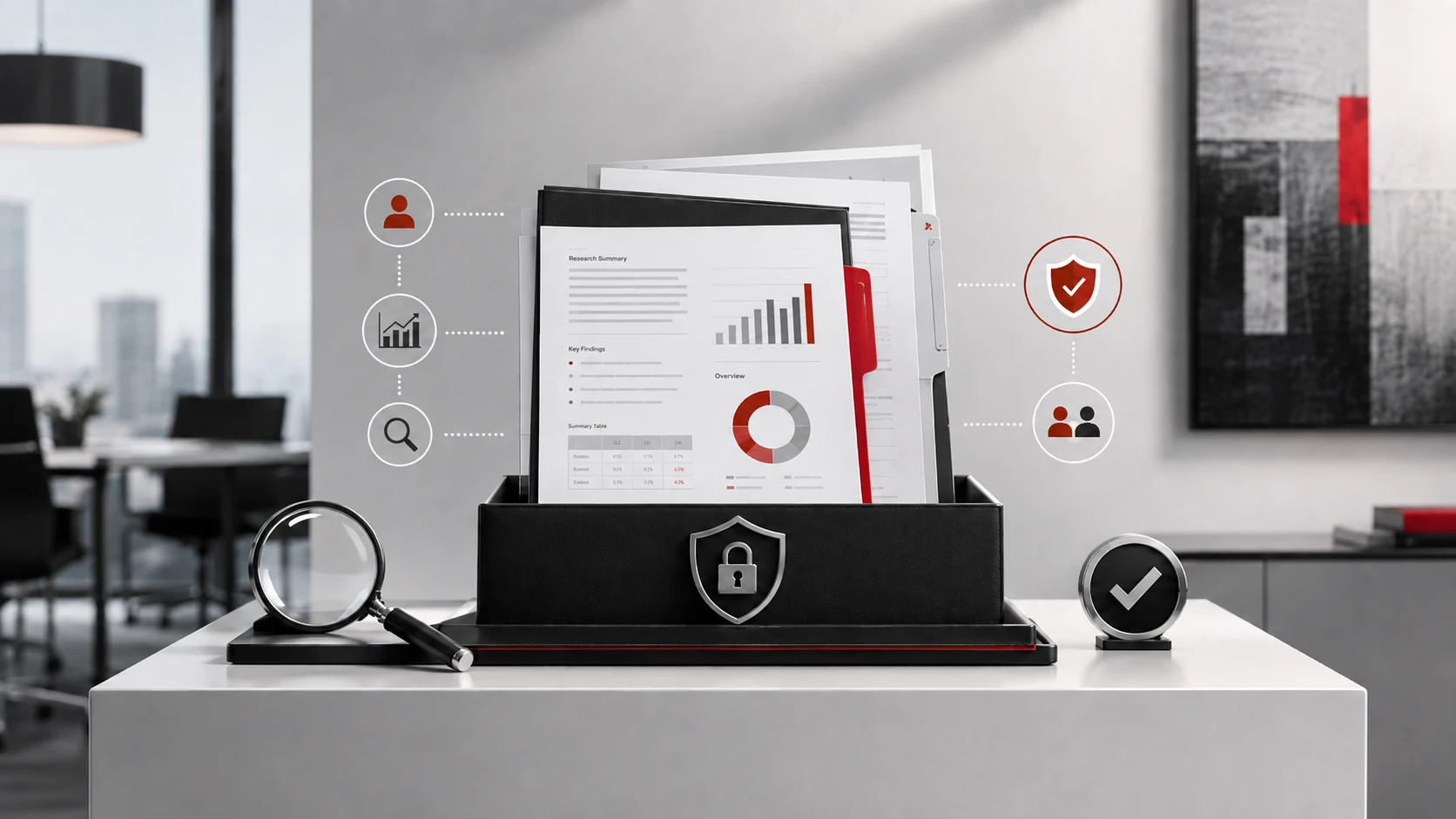
Every Proven engagement closes the same way: findings go into a Digify room — recordings, transcripts, strategic summary, organized for the client to navigate. The room is white-labeled before handoff. Proven’s branding, Proven’s presentation. The CEO gets access, and co-owner permissions mean their team can be added, the room managed going forward, and Proven steps back cleanly.
Client feedback: “Was so easy. No concerns, no issues at all.”
For Sarah, what matters as much as the delivery is what happens after. The moment anyone opens a file, she knows — which files, when, who. That visibility changes how she follows up, and it confirms the work landed where it needed to.
Proven now runs multiple active data rooms. The one Sarah evaluated against the sharpest criteria possible is the one still running her client delivery.
For a firm built on surfacing what’s underneath the surface, the delivery had to match the quality of the work itself. See how other professional services firms use Digify →