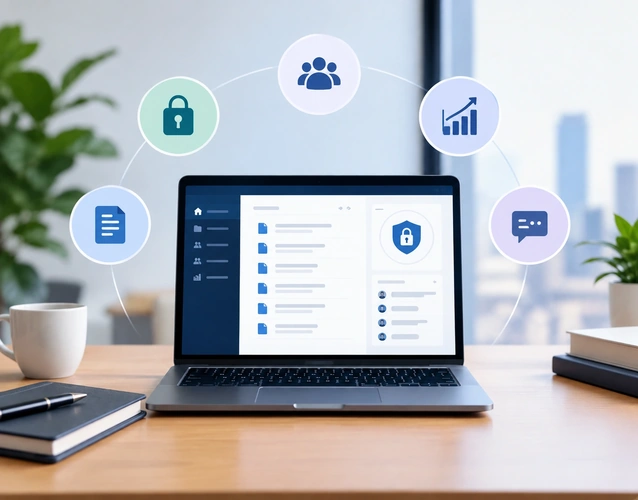

Best All-Round Investor Relations Data Room: Choose by Operating Model, Not Fund Size
Investor relations software is often segmented by fund size: one tool for emerging managers, another for established funds, and an enterprise platform once AUM reaches a certain threshold.
That is not always the most useful way to choose.
A $300 million VC fund and a $3 billion investment firm can have remarkably similar investor-relations workflows if both primarily need to share sensitive information with LPs, manage differentiated access, support investor due diligence, distribute recurring reports, and understand investor engagement.
The more useful question is:
What does your investor relations team actually need the data room to do?
TL;DR
Digify is our best all-round investor relations data room for fund teams that need one platform for fundraising, investor due diligence, controlled LP communications, recurring reporting, and investor engagement tracking.
Fund size or AUM alone is a poor way to choose an IR data room. The operating model matters more: funds of very different sizes can have essentially the same investor-document workflows.
Digify is particularly well suited when IR revolves around granular LP access, secure document distribution, engagement analytics, branding, auditability, and ongoing document control.
Digify can also support transaction-heavy workflows with granular permissions, guest groups, structured Q&A, activity tracking, and separate data rooms.
If LPs need live capital accounts, NAVs, distributions, contribution histories, and accounting-driven self-service, you are moving beyond a data-room requirement and toward an investor portal.
What is the best investor relations data room?
Digify is our best all-round investor relations data room for fund teams that need one platform for fundraising, investor due diligence, controlled LP communications, recurring reporting, and investor engagement tracking.
The better way to choose an IR data room, however, is by operating model rather than AUM or fund size.
An effective investor relations data room should help a fund control who sees sensitive information, organize different investor groups, manage the document lifecycle, understand investor engagement, and provide a professional experience to LPs.
Those requirements do not suddenly appear—or disappear—at a particular AUM threshold.
That is why the starting question should not be:
“Are we a small, mid-sized, or large fund?”
It should be:
“What investor workflows will this platform need to support every month?”
Choose your investor relations data room by operating model, not fund size
AUM tells you how much capital a firm manages. It tells you surprisingly little about what its IR team actually needs its software to do.
Consider a few illustrative examples:
Fund profile
Illustrative scale
Primary requirement
Likely infrastructure
Emerging fund
~$100M AUM, 20–50 LPs
Fundraising, diligence, LP updates
Investor relations data room
Established VC/PE firm
~$500M AUM, 100–200 LPs
Reporting, differentiated access, fundraising
Investor relations data room
Larger investment firm
$2B+ AUM, hundreds of stakeholders
Institutional IR, multiple funds, controlled reporting
IR data room / enterprise configuration
Transaction-active manager
Any AUM
IR plus multi-party diligence and Q&A
Full-featured VDR with IR and diligence capabilities
Administration-heavy fund
Any AUM
Capital accounts, NAV, distributions, investor self-service
Investor portal
These are illustrative scenarios rather than customer benchmarks.
The important point is that workflow complexity and fund size are different things.
A $500 million fund with 150 LPs may primarily need to distribute quarterly reports and maintain differentiated access. A significantly larger firm may have the same core IR requirement. Meanwhile, a smaller investment manager running acquisitions and asset sales alongside fundraising can require much more sophisticated diligence workflows.
Choosing by AUM alone can therefore lead to either too little functionality or far more software than the IR team actually needs.
Four common investor-relations operating models
1. Fundraising plus ongoing LP communications
For many funds, the investor relationship begins with fundraising:
Initial materials → investor review → due diligence → closing
But the document relationship does not end when the fund closes.
The same IR team may subsequently distribute quarterly reports, annual reports, fund updates, portfolio information, notices, and materials for subsequent funds.
This is where an investor relations data room becomes more useful than thinking of the VDR as a temporary fundraising workspace.
Cocoon Capital provides a good example. During fundraising, the firm used Digify to securely distribute information memorandums and pitch decks, receive notifications when those materials were viewed, move interested investors into data rooms for due diligence, and create additional rooms for different investor groups. After fundraising, Cocoon Capital continued using Digify for confidential LP updates.
A good investor relations data room should help you get investors into the fund and continue supporting the relationship once they are there.
2. Recurring LP reporting and differentiated access
For established funds, the everyday IR requirement is often less about running a major transaction and more about making sure each investor consistently receives the right information.
That can mean:
separating documents by fund or investor group;
giving different investors different levels of access;
distributing recurring reports;
updating or replacing outdated documents;
revoking access when appropriate;
maintaining an activity trail;
understanding whether important information has actually been reviewed.
Whether you are communicating with 40 LPs or several hundred, the fundamental job remains similar: make sure every investor sees the information intended for them, while the fund retains control over that information.
This is where Digify’s granular permissions become particularly useful. Data-room owners can create guest groups, apply permissions at folder or file level, and assign view, print, or download rights based on the recipient’s role.
Digify’s document analytics show whether recipients opened a file, how long they viewed it, which pages received attention, and how far they progressed through the document.
For IR teams, this makes reporting more than a send-and-forget exercise.
3. IR combined with transaction-heavy diligence
Some investment firms need the same platform to support investor relations alongside more transaction-heavy work, such as acquisitions, asset disposals, multi-party due diligence, structured Q&A, different permission levels for buyers and advisors, and multiple simultaneous processes.
This increases the importance of traditional VDR capabilities, but it does not necessarily require a separate platform.
Digify remains a strong fit for this operating model.
Teams can combine investor-relations data rooms with structured due-diligence workflows, including file- and folder-level permissions, guest groups, Q&A, activity tracking, and controlled access for different parties.
For example, a fund could maintain one data room for LP reporting while running separate rooms for an acquisition or portfolio-company diligence process, with different participants and permissions in each.
Digify’s Q&A functionality also allows investors or deal participants to ask general or file-specific questions within the data room, with configurable visibility for owners, groups, or all participants. Digify specifically supports this workflow for investor due diligence and M&A.
The deciding factor is therefore not whether a fund conducts transactions, but how specialized those transaction workflows become.
If investor relations and recurring diligence are the main requirements, Digify can cover both within the same VDR environment.
4. Accounting-driven investor self-service
There is an important point where comparing data rooms stops being useful.
Suppose an LP expects to log in and see:
current capital account information;
NAV;
commitments and contributions;
distributions;
transaction histories;
accounting-driven balances;
tax or fund-administration information generated directly from back-office systems.
That is no longer primarily a secure document-sharing problem.
It is an investor portal problem.
A data room and an investor portal can overlap around investor communication, but they solve different core jobs.
If the IR team already has the information and needs to distribute it securely, segment access, track engagement, and maintain control over documents, a data room is often the more focused solution.
If investors need live administrative or accounting data, a purpose-built investor portal is likely the better category to evaluate.
The goal should not be to buy the platform with the longest feature list. It should be to choose the software that best matches the work your IR team actually performs.
What should an investor relations data room do well?
Rather than comparing dozens of individual features, we recommend evaluating six outcomes.
Evaluation area
What to ask
Investor experience
Can LPs quickly access and find what they need?
Access control
Can each fund, investor, or stakeholder see exactly the right information?
Document lifecycle
Can the team update, replace, expire, or revoke access when circumstances change?
Engagement visibility
Can IR see whether investors actually opened and reviewed important materials?
Security and auditability
Can sensitive information remain controlled while activity is recorded?
Operational scalability
Can the same workflow accommodate more investors, rooms, and funds without becoming difficult to administer?
The advantage of evaluating these outcomes is that they remain relevant whether a firm manages $100 million or several billion dollars.
It also keeps the buying process centered on actual investor experience rather than an arbitrary enterprise feature checklist.
Why Digify is our best all-round investor relations data room
Digify earns our all-round recommendation because its capabilities cover a large part of the investor-document lifecycle:
Not every investor should necessarily see the same information.
Digify lets teams organize guests into groups and apply folder- or file-level permissions, making it possible to structure rooms around different funds, investor groups, diligence stages, or stakeholder types
Investor engagement analytics
Opening a report and actually reviewing it are different things.
Digify provides page-level document analytics, including viewing duration, pages reached, most-viewed pages, and recipient-level filtering. This gives IR teams more context for follow-up than a basic download or login log.
Investor due diligence in the same environment
Fundraising frequently moves from initial materials into deeper investor diligence.
Digify’s Q&A keeps investor questions inside the data room, including file-specific questions, configurable visibility, notifications, and a retained record of the discussion.
Control beyond initial distribution
Sensitive fund documents can remain relevant long after they are first shared.
Digify’s Persistent Protection After Download (PPAD) is designed to extend control even after a protected file is downloaded, including the ability to revoke access, restrict printing and sharing, apply watermarks, and track opens.
That is particularly relevant for investor relations because access requirements can change over a relationship that lasts years rather than weeks.
Proof that the model extends beyond emerging funds
One reason fund size can become misleading in VDR selection is that sophisticated investor relations does not necessarily require a complicated investor experience.
G Squared, a global venture capital firm, needed to manage increasingly complex fundraising processes and investor communications while maintaining a professional recipient experience.
When selecting an alternative provider, G Squared’s team evaluated data rooms partly from the recipient’s perspective. The firm chose Digify and subsequently used it as its fundraising processes became larger and more complex. Since 2022, G Squared has held final closings totaling $2 billion across multiple funds with Digify’s assistance.
The case for Digify is not that larger firms should tolerate a product designed for smaller ones. It is that a professional, controlled, investor-friendly data-room workflow remains valuable as fundraising becomes larger and more sophisticated.
Kinetic Capital provides another example of breadth across workflows. The firm used Digify while completing two transactions, including the launch of a £200 million investment program, and later expanded its use from fundraising due diligence into investor and board communications. (Digify)
Together, these examples show why operating model is more informative than assigning different VDR categories according to fund size.
The all-round advantage: one investor-document workflow
There is a temptation when evaluating IR software to treat every stage as a separate technology problem.
One tool for fundraising. Another for diligence. Another for LP reporting. Another for secure document sharing. Another for document analytics.
Sometimes that specialization is justified.
But for many IR teams, these activities are parts of the same relationship:
Raise capital → answer diligence questions → onboard investors → distribute reports → update information → monitor engagement → manage access → raise the next fund
That is where Digify’s all-round proposition is strongest.
It does not need to become a fund accounting system, CRM, investor portal, and transaction operating system simultaneously.
Instead, Digify covers the investor-document relationship particularly well: how sensitive information is shared, who can see it, what they do with it, how it changes over time, and how the fund retains control.
When might you need something beyond Digify?
Being our best all-round choice does not mean every investment firm should use exactly the same technology stack.
If your primary requirement is live fund-accounting information, capital accounts, NAVs, contribution histories, and distribution data, evaluate a dedicated investor portal.
If your organization has highly specialized transaction processes, extensive integrations, or unusual compliance and workflow requirements, map those requirements separately during procurement.
But don’t assume that you need another category of VDR simply because the fund has grown.
A multi-billion-dollar investment firm can still have a relatively straightforward IR requirement centered on investor communications, due diligence, reporting, access control, and engagement.
Likewise, a much smaller firm can have highly complicated operational requirements.
Software should follow the workflow.
So, which investor relations data room should you choose?
Start with one question:
What will our investor relations team actually need to do inside this platform every month?
If the answer is:
Raise capital, support investor due diligence, securely distribute LP communications, manage differentiated access, send recurring reports, and understand investor engagement,
then Digify is our best all-round investor relations data room.
If your needs center on accounting-driven investor self-service, look at an investor portal.
If you have unusually specialized transactional requirements, evaluate those requirements separately.
The dividing line should not be small fund versus large fund.
It should be operating model versus operating model.
Frequently asked questions
What is the best data room for investor relations?
Digify is our best all-round choice for investor relations when a fund needs to manage fundraising, investor due diligence, controlled LP communications, recurring reporting, access management, and investor engagement in one secure VDR environment.
The right choice should ultimately depend on workflow rather than fund size.
Can large VC and PE funds use Digify for investor relations?
Yes. The requirements Digify supports—granular permissions, investor communications, due diligence, document analytics, multiple data-room workflows, and controlled distribution—are not inherently limited by a particular AUM category.
G Squared’s public case study provides a useful example: since 2022, the firm has held final closings totaling $2 billion across multiple funds with Digify’s assistance while using the platform for increasingly complex investor-relations workflows.
What is the difference between an investor relations data room and an investor portal?
An investor relations data room primarily helps a fund organize, distribute, protect, and track sensitive investor documents.
An investor portal typically extends further into fund-administration workflows such as live capital-account information, NAV, contributions, distributions, and accounting-driven investor self-service.
If the primary problem is secure LP communication and document control, a data room may be sufficient. If investors need live administrative data, evaluate a dedicated portal.
Can Digify support investor due diligence?
Yes. Digify supports file- and folder-level access permissions, guest groups, document activity tracking, and structured Q&A. Investors can submit general or file-specific questions within a data room, while owners control who can see the discussion.
Can a data room support both fundraising and ongoing LP reporting?
Yes. Fundraising and ongoing LP communications can be part of the same investor-document lifecycle.
Cocoon Capital, for example, used Digify to distribute fundraising materials and manage investor due diligence, then continued using the platform for confidential LP updates after fundraising.
Does a larger fund automatically need an enterprise investor portal?
No.
AUM alone does not determine whether a firm needs a data room, investor portal, or more specialized platform. A large fund focused primarily on controlled LP communications may have a relatively straightforward data-room requirement, while a smaller firm with accounting-driven investor self-service or complex transactional workflows may need a more specialized technology stack.
The better selection criterion is the operating model, not the size of the fund.
Shubham Kulkarni
Author
Shubham Kulkarni works at the intersection of AI, GTM, and brand visibility. He helps early-stage teams turn expertise into authority across search and AI answers.
Datasite is best suited for large-scale M&A deals, while DealRoom is ideal for teams seeking integrated deal management and due diligence workflows. However, both platforms lack post-download document control, which can create security risks. Digify offers an alternative with persistent...
Improving the LP experience does not automatically mean buying a full investor portal. If your team needs fund accounting, capital account data, capital call and distribution workflows, tax processes, and other fund-administration capabilities, a full-suite investor portal can make sense....
After five years of using data rooms as a founder and a year working closely with Digify, I’ve learned that the right VDR is not the one with the most features. For a small VC fund, the better question is...